May 22, 2027 7:00pm
The Scott Center at Holy Trinity - 5625 Holy Trinity Dr, Melbourne, FL 32940
What's Playing?
WILLIAMS (ARR.) The Star-Spangled Banner
WILLIAMS American Journey
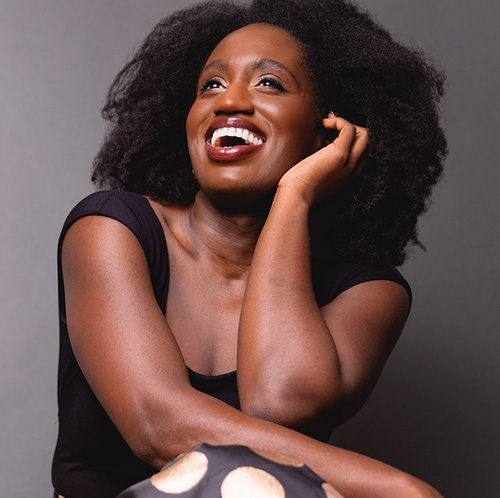
WILLIAMS Seven for Luck (Tesia Kwarteng, soprano) (SE U.S PREMIERE)
WILLIAMS The Mission Theme (Theme for NBC Nightly News)
WILLIAMS Born on the Fourth of July
WILLIAMS The Cowboys Overture
WILLIAMS Summon the Heroes
WILLIAMS The Patriot
WILLIAMS March from 1941
PISZCZEK The Song of Arion (WORLD PREMIERE)
Program Information
"The sound of America — brought to life by your SCSO and the next generation beside them."
Inside the Music
Some concerts celebrate American music by looking backward. Others focus on a particular style, period, or national story. John Williams’ America does something more expansive. It brings together music shaped by ceremony, memory, conflict, humor, myth, aspiration, and hope—and places that music inside a living community of performers.
At the center of the program is a question: What does America sound like when it is understood not as a slogan, but as an experience?
The answer is never only heroic. It can be bold and reflective, triumphant and wounded, public and deeply personal. It can sound like a fanfare heard by millions, or a single voice trying to make sense of a life. It can come from a familiar film theme, a newly discovered song cycle, a world premiere, or the sound of young musicians playing beside professionals for the first time.
That range is what makes John Williams such an important figure in American musical life. His music is often associated with grandeur—the brass, the sweeping strings, the unmistakable sense of arrival. But beneath that surface is a composer who understands that musical scale and emotional scale are not the same thing.
A great orchestral gesture can make a nation feel larger than itself. A quiet melody can remind us what that nation is supposed to mean.
American Journey begins from the idea of movement. Its title suggests more than travel from one place to another. It evokes the larger American habit of imagining the future as a destination: somewhere ahead, somewhere better, somewhere still being built.
Williams’s music is particularly powerful when it gives that kind of aspiration a physical shape. Themes rise. Harmonies open. Rhythms gather momentum. The orchestra seems to move forward even when the music is standing still. That forward motion is one of the defining features of his musical language, but it is not merely optimism for its own sake. Williams understands that hope becomes meaningful only when it has something to overcome.
That tension is also present in The Mission Theme. The music is familiar to millions of listeners, but familiarity should not obscure its remarkable construction. The theme is spacious, dignified, and immediately memorable without being simplistic. Its melody seems to extend beyond the moment in which it first appears, as if it is carrying a larger responsibility than a single broadcast or image can contain.
The music does not shout. It trusts the power of a noble line, carefully supported by harmony and orchestral color. The result is a kind of public musical language—serious without being severe, expansive without becoming impersonal. It feels designed to accompany important events, but it also retains enough warmth to feel human.
That human scale becomes even more important in Born on the Fourth of July.
Here, Williams turns away from uncomplicated celebration. The music confronts the emotional cost of national mythology: the distance between the promise of heroism and the reality of sacrifice, injury, disillusionment, and loss. Its long, searching lines resist the easy certainty of a traditional patriotic march. Instead of presenting war as spectacle, the music remembers the individual caught inside it.
This is one of Williams’s greatest strengths. He can write music that sounds unmistakably American without pretending that America has only one emotional register. The music can honor courage while acknowledging suffering. It can recognize public ideals while remaining attentive to private consequences.
The same contrast runs through the more energetic works on the program.
The Cowboys Overture carries the broad physical energy of the American frontier. It is full of motion, color, and theatrical momentum. The orchestra becomes a landscape in motion—open spaces, quick turns, sudden bursts of activity, and a sense that the horizon is always expanding.
March from 1941 approaches American spectacle from a different angle. Its energy is more comic, exaggerated, and unruly. It reminds us that the American imagination is not made only of solemn monuments and heroic poses. It also contains satire, mischief, absurdity, and a love of excess. Williams understands how quickly grandeur can become theatrical—and how thrilling that theatricality can be when embraced completely.
The Patriot brings the emotional language back toward memory and sacrifice. It is not simply a portrait of military courage. Its power comes from the way Williams allows the orchestra to hold both nobility and grief at the same time. The music reaches toward ideals, but it does not erase the human beings who bear the cost of those ideals.
And in Summon the Heroes, the orchestra becomes a public gathering place. Written for the Olympic Games, the music is built around collective effort: the individual striving within a larger community, the athlete surrounded by a nation, the personal act transformed into a shared experience.
Those ideas prepare us for the most important musical event of the program: the Southeast U.S. premiere of John Williams’s Seven for Luck, performed by soprano Tesia Kwarteng.
This is not simply another selection by a famous composer. It reveals a side of Williams that audiences may not expect. Rather than beginning with the public language of the fanfare or the cinematic theme, Seven for Luck turns inward. It is a song cycle for soprano and orchestra based on poetry by Rita Dove, and its seven connected songs trace the changing emotional landscape of a human life.
The titles themselves suggest the breadth of the journey: Song, Chocolate, Adolescence, Black on a Saturday Night, Serenade, Expecting, and Starting Over. The cycle moves through memory, identity, desire, intimacy, expectation, and renewal. These are not abstract patriotic subjects. They are the private experiences through which a person comes to understand the world.
That is precisely what makes the Southeast U.S. premiere so significant.
Although Seven for Luck was first heard decades ago, this performance will be a first encounter for audiences throughout the region. A premiere is not simply a date in a work’s history. It is the moment a piece becomes present. Before the first performance, the music exists as a score, an idea, a recording, or a story someone has told about it. At the premiere, it becomes sound in a particular room, carried by particular musicians, heard by particular people.
Tesia Kwarteng’s performance gives that moment a human center. The soprano is not merely another soloist placed above the orchestra. She becomes the voice through which the cycle’s different stages of life are revealed. Williams’s orchestration surrounds the singer with color, atmosphere, and memory, but the words remain central. The orchestra does not simply decorate the poetry. It responds to it, deepens it, interrupts it, and sometimes seems to remember what the voice has just said.
In Seven for Luck, Williams’s melodic gift operates differently than it does in his most recognizable film music. The melodies are still shaped with extraordinary clarity, but they are more closely tied to language and psychological detail. The music must follow the shifting shape of a poem. It must know when to expand, when to wait, when to allow a phrase to remain unfinished.
The cycle asks the orchestra to listen as much as it speaks.
That makes the Southeast premiere an especially meaningful part of this program. Audiences will not simply hear another celebrated work by John Williams. They will encounter a deeper and more personal dimension of his voice—one concerned less with national symbols than with the individual life moving through time.
Then the program turns toward another first performance: the world premiere of Mark Piszczek’s The Song of Arion.
If Seven for Luck gives us a previously unheard regional encounter with an established work, The Song of Arion gives us something even rarer: the first public life of a new piece.
No audience has heard this work before. No recording can tell us what to expect. There is no tradition of performance surrounding it, no familiar interpretation to compare, no established history. The music will be born in the presence of the SCSO and its audience.
That is the special responsibility—and privilege—of a world premiere.
Mark Piszczek is not an unfamiliar voice to this orchestra. He is a longtime SCSO collaborator whose music has become part of the orchestra’s artistic life. That history matters. A world premiere is always an act of risk, but it is also an act of trust. The composer trusts the musicians to understand and realize something that has never yet existed in sound. The orchestra trusts the composer to take the audience somewhere new. The audience agrees to listen without guarantees.
The title The Song of Arion places music, myth, and storytelling at the heart of the work. Like the music of John Williams, it suggests a world shaped by vivid themes, clear dramatic energy, and the belief that an orchestra can tell a story without words. Piszczek’s music stands beside Williams not by imitating him, but by sharing a willingness to think cinematically—to build atmosphere, establish character, create momentum, and allow musical ideas to return with greater emotional meaning.
The pairing of these two works creates a remarkable span of time.
Seven for Luck opens a window onto a less familiar work by one of the most influential American composers of the modern era. The Song of Arion opens a window onto the future. One work is receiving its first performance in this region. The other is receiving its first performance anywhere.
Together, they remind us that orchestral music is not only a record of what has already been accomplished. It is also a place where new artistic lives begin.
That idea becomes even more powerful in the second half, when more than fifty student musicians join the SCSO for a side-by-side performance.
The students are not simply watching the professional orchestra from a distance. They are entering the sound itself. They become part of the same musical structure, sharing the same pulse, listening across the same sections, and discovering what it means to contribute to something larger than any one performer.
In that moment, the meaning of “American” becomes especially clear.
America is not a finished composition. It is a work continually being performed, revised, argued with, remembered, and reinvented. It is built from inherited traditions, individual voices, collective effort, and the willingness to imagine something that has not yet existed.
That is what the SCSO brings to this program.
We bring the music that has already shaped how generations hear courage, wonder, sacrifice, motion, and hope. We bring the regional premiere of a work that has waited to be heard here. We bring the world premiere of a piece created by one of our own collaborators. And we bring the next generation onto the stage—not as an ornament to the program, but as part of its central meaning.
The sound of America is not one sound.
It is the fanfare and the elegy. The march and the lullaby. The public ceremony and the private confession. The music we recognize immediately and the music we are hearing for the first time.
On this stage, all of those sounds meet.
And for one evening, the future of American music is not somewhere else. It is here, being made in real time.
A melody can sound like an individual voice while also carrying the weight of a congregation.
In Come Sunday, the orchestra does not simply accompany an idea. It becomes the space in which that idea unfolds. The music gathers, waits, testifies, and finally erupts. Its emotional power comes from the sense that something is being prepared beneath the surface—something that cannot remain contained forever.
Duke Ellington’s Three Black Kings approaches American identity through history and symbol. The three kings of the title are Balthazar, one of the biblical Magi; Solomon, the great king of the Old Testament; and Martin Luther King Jr., whose leadership reshaped the moral and political imagination of the United States.
By placing these three figures together, Ellington creates a powerful connection between sacred history, wisdom, kingship, and the modern struggle for justice. The work is not a conventional biography of Martin Luther King Jr. Instead, it is a musical act of elevation. Ellington places King within a larger human and spiritual history, suggesting that his significance cannot be separated from the centuries of belief, suffering, leadership, and hope that came before him.
The music moves through sharply contrasting worlds. The opening portrait is driven by percussion and filled with an atmosphere of movement and ceremony. The portrait of Solomon turns toward dance, swing, and the social energy of the jazz bandstand. The final movement, devoted to Martin Luther King Jr., begins with a more reflective and bittersweet character before gathering strength and opening into gospel-inflected hope.
That progression is central to Ellington’s vision. He does not separate the sacred from the popular, or the concert hall from the dance floor. For Ellington, the orchestra can become a procession, a sermon, a nightclub, a royal court, and a public square. Each musical world carries its own dignity.
This is one of the reasons Ellington’s music remains so difficult to categorize. His work does not ask whether jazz belongs in the concert hall. It simply enters the concert hall with its full personality intact.
Wynton Marsalis’s Violin Concerto in D Major continues that conversation from another direction. The concerto uses the large-scale architecture of the classical tradition, but its musical imagination is shaped by jazz, blues, New Orleans, fiddle music, and the expressive freedom of the solo performer.
The solo violin moves through four contrasting worlds: Rhapsody, Rondo Burlesque, Blues, and Hootenanny. Each movement reveals a different kind of musical personality. The violin can sound inward and searching, sharply comic, deeply lyrical, or exuberantly communal. Marsalis treats virtuosity not as empty display, but as a form of storytelling. The soloist is not simply conquering difficult music; the soloist is traveling through different American landscapes.
The concerto’s energy comes from the tension between written structure and improvisatory instinct. Rhythms can swing, hesitate, lean forward, or seem to pull against the orchestral pulse. Melodies may stretch beyond the expected line. The solo violin is asked to be both highly precise and intensely personal.
That combination is essential to Marsalis’s musical world. The concerto is fully composed, but it never feels emotionally predetermined. It leaves room for risk, personality, humor, and surprise. The orchestra does more than provide a backdrop for the soloist. It becomes a constantly changing community—sometimes answering, sometimes challenging, sometimes surrounding the violin with the full force of the ensemble.
Placed side by side, these three works reveal three distinct ways of hearing America.
Thomas looks toward worship and communal release. Ellington looks toward history and the symbolic power of human leadership. Marsalis looks toward the many musical identities that can exist within a single artist and a single nation.
But the deeper connection is not simply that all three composers draw from jazz, gospel, or Black American musical traditions. It is that all three reject the idea that serious music must be detached from lived experience. Their music can be intellectually sophisticated without becoming emotionally remote. It can be formally ambitious while remaining connected to the body—to the pulse, the voice, the dance, the shout, and the gathering of people in a shared space.
This is what makes American Masters more than a collection of works by important composers. It is a portrait of American music as a continuing conversation between memory and invention.
The music remembers where it came from. It remembers the church, the bandstand, the street, the dance hall, the civil-rights movement, the concert stage, and the communities that carried these sounds forward. But it does not remain in the past.
It transforms.
And somewhere inside that transformation is the sound of America itself: many voices, many histories, and many musical languages becoming one living, unfinished song.
TICKET INFORMATION
Tickets are $35 in advance for adults and are available through our website or by calling (855) 252-7276. Tickets can also be purchased in person at any Marine Bank & Trust location. To find a ticket outlet near you, click here. Tickets at the door are $40. All seating is general admission — seats are not assigned.
All SCSO concerts are free for those 18 and under or any college student with a valid student ID. Discounted tickets are available through the Symphony for Everyone program.
Season 18 All Access Pass and Flex Ticket holders: Your pass or flex tickets are valid for this concert and all Season 18 subscription concerts. All Access Pass holders will find their reserved seats waiting. Flex ticket holders do not need to call ahead — simply present your tickets at the door upon arrival.
Artist Information